
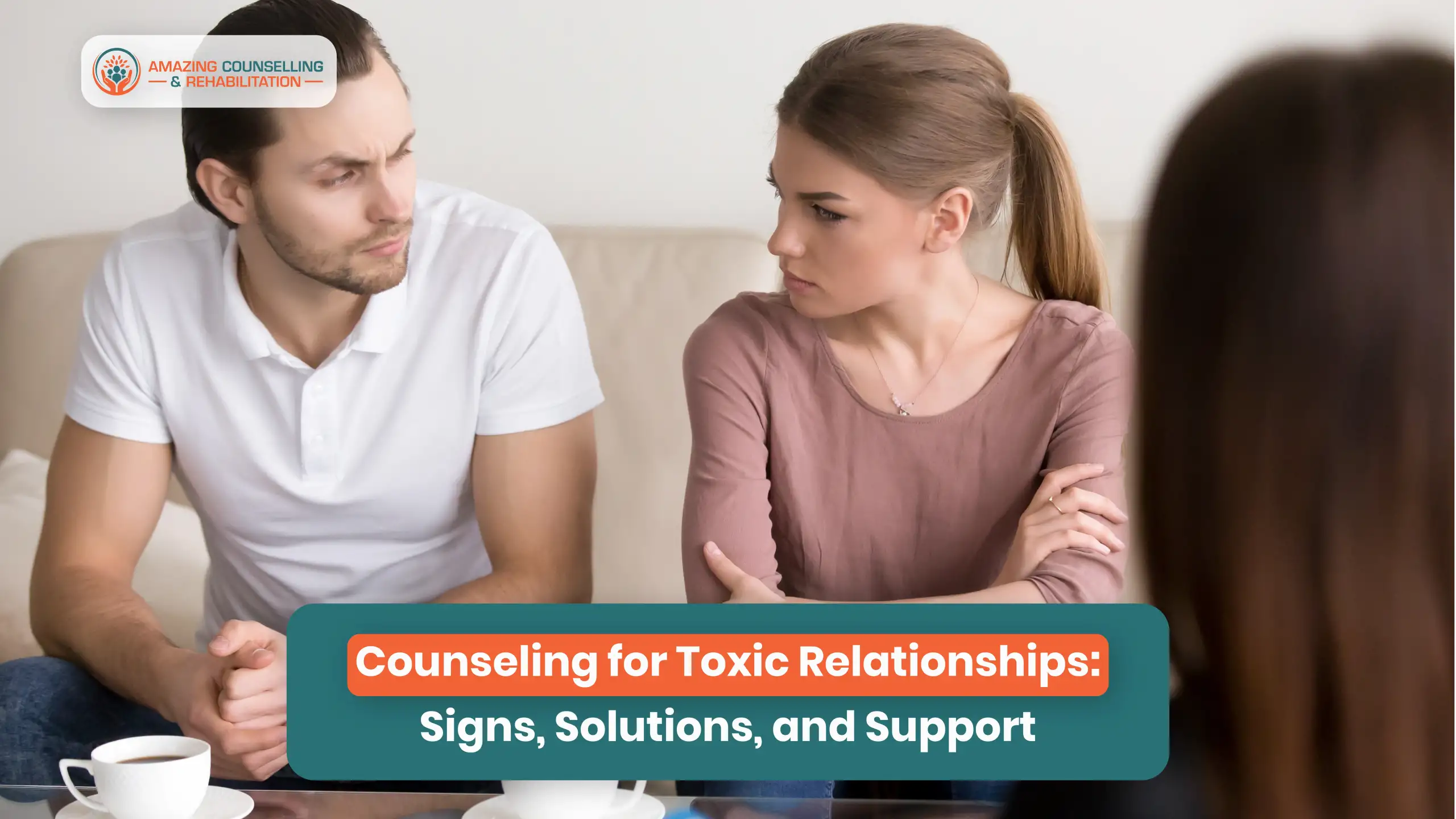
Toxic relationships usually develop with slow processes that encourage the emergence of harmful behaviors like manipulation, emotional abuse, and constant criticism appear normal over time. Research reveals these relationships can extremely impact mental health that led to depression, anxiety, emotional dependency, and low self-confidence.
Many people remain involved in or caught up in unfavorably functioning relationships because of deeply entrenched abandonment fears, emotional entanglement, or hopes for improvement. Relationship counseling delivers professional advice, passionate and constructive communication approaches, and demonstrative support which enable people to see red flags, restore self-trust, and make informed choices for themselves.
What Is a Toxic Relationship?
A toxic relationship is a relationship which is detrimental to both parties involved, where disharmony and pain overshadow the harmony and trust existing in the relationship. More than just the usual disagreements, toxic relationships consist of manipulations, constant criticisms, and control which disrupts one’s psychological well-being. Relationship counseling provides insight on how to detect toxic relationships before they get worse.
There are some common indications that include emotional abuse, suspicion, distrust, jealousy, and manipulation through communication that impacts both physical and psychological health. People are expected to feel anxious, worried, tired, or low self-confidence because of the conflicts they face. Couples look for counseling for toxic relationships and unhealthy relationships which empowers them to develop their confidence and communication skills. Understanding what psychotherapy is also helps individuals and couples understand unhealthy relationship patterns, improve emotional well-being, and build healthier communication and coping strategies.
Common Signs of a Toxic Relationship
Early recognition and detection of toxic relationship patterns help individuals to protect their emotional well-being, advance communication, and seek timely professional relationship support services.
Emotional Signs
Common emotional warning signs of toxicity in a relationship normally involve persistent anxiety, emotional fatigue, and reduced sense of self-worth. Most people find themselves in a position where they have to watch what they say to prevent conflict from escalating. All of these unfavorable effects ultimately influence one’s psychological state which needs relationship counseling.
Behavioral Signs
Early signs of destructive behavior include manipulation, suspiciousness, repeated arguments, and controlling behavior that detach individuals from supportive relationships. Gaslighting can destabilize reality and produce confusion or self-doubt. Seeking counseling for toxic relationships helps couples’ patterns of concerning behavior and develop healthier emotional responses and relationship boundaries.
Communication Red Flags
Constant blame, silent treatment, disrespectful or impolite language, and emotional invalidation are usually the signals of a toxic relationship that happen through unproductive communication patterns. These behaviors play a role to prevent healthy conflict resolution and deteriorate emotional connection between partners. Specialized communication counseling for couples shows healthier communication approaches and strategies that reassure empathy, understanding, and communal respect.
Causes of Toxic Relationship Patterns
Abusive relationship patterns generally arise from poor communication practices, unresolved emotional problems, and deeply rooted psychological experiences.
Childhood Trauma
Childhood trauma can affect adult relationship behaviors in cases where the individual grows up in environments that have a lot of conflict, neglect, or emotional instability. This can cause a lot of fear, insecurity, and negative attachment styles. The individual will be able to manage their relationship behaviors with relationship counseling.
Poor Communication Habits
The avoidance, aggression, or passive behavior often contribute to relationship toxicity which are ineffective communication habits. Resentment and misinterpretations steadily rise when couples fail to express their emotions politely. Partners can improve emotional expression, listening skills, and conflict resolution for healthier interactions by expert communication counseling for couples.
Unresolved Emotional Issues
Past experience of emotional pain, anger, or unprocessed issues from one’s life can be antagonizing in romantic relationships. A person might transfer his or her emotional burdens into interaction with a loved one and cause many conflicts. A person can work through his or her emotions by counseling for relationship problems within a romantic relationship.
Trust Problems
Dishonesty, betrayal, abandonment, or preceding relationship trauma are some trust issues which normally can lead to suspiciousness, possessiveness, and constant distrust that damage emotional intimacy over time. Professional couples therapy for trust issues helps partners rebuild trust, reinforce communication, and reestablish emotional security within the relationship. Cognitive behavioral therapy services to help couples advance communication, manage conflict, and build healthier relationship patterns.
Dependency or Insecurity
Personal insecurity and emotional dependence may drive individuals to endure unhealthy behavior or become extremely controlling in relationships. Fear of refusal or loneliness generally keeps toxic patterns active for years. Individuals learn to build self-confidence, establish boundaries which make healthier emotional independence through toxic relationship counseling.
How Counseling Helps Toxic Relationships
Counseling professionals assist people to realize destructive behaviors, enhance their emotional awareness, and build healthy relationships through time.
Identifying Unhealthy Patterns
Couples are made to recognize behaviors that are harmful to the relationship like emotional withdrawal, manipulation, blaming, and control in relationship counseling. The therapists are able to recognize the pattern of communication and emotional interactions that may be hurting the relationship. Individuals are able to become self-aware of their reactions to stress through counseling for toxic relationships.
Improving Communication
Counseling trains individuals in active listening, respectful expression, and feeling of approval and support to decrease misunderstandings and resentment. Respectful and supportive communication is essential to resolve conflict and rebuild emotional connection between partners. Specialized communication counseling for couples always supports partners to communicate more calmly, openly, and efficiently during difficult conversations and disagreements.
Rebuilding Trust
A loss of trust may be caused by betrayal, lies, emotional negligence, and frequent arguments between the two people. Counseling is an ideal setting whereby couples deal with emotional pain, gain accountability and ensure emotional security. Couples therapy for trust issues is highly recommended to improve honesty and communication.
Conflict Resolution Strategies
The most prevalent feature of toxic relationships is an unhealthy coping strategy with conflicts. This can upsurge emotional suffering and hurt the connection. Therapy provides direction in conflict resolution in an effective manner through teaching patience, learning, cooperation, and support. Relationship counseling and therapy helps individuals deal with conflicts without hurting themselves emotionally.
Emotional Healing and Self-Awareness
The procedure of emotional healing is made through counseling and can only be achieved by assisting individuals to resolve their trauma, insecurity, and unresolved emotional issues regarding the relationship. Awareness of self enables one to understand one’s emotional reactions. Professional counseling on relationship issues enables emotional growth and emotional resilience.
Couples Therapy
Couples therapy emphasis to improve relationship dynamics by helping partners address trust concerns, communication issues, and recurrent conflicts together. Therapists offer guidance to couples toward healthier emotional connections and communal goals. Many individuals pursue couples counseling to reconstruct confidence, trust, reinforce connection, and produce more helpful relationships.
Individual Counseling
Individual counseling plays an important role in helping people explore personal emotional challenges, trauma, anxiety, or behavioral patterns which contribute to toxic relationships. This is important because it encourages confidence building, self-reflection, and emotional regulation. Individuals grow healthier coping strategies that positively influence existing and future relationships through individual relationship counseling.
Family Therapy
One of the most important counseling is family therapy which may help when toxic relationship patterns affect children or extended family relationships. It works by improving family communication, emotional understanding, and conflict management within the household. In some situations, family relationship counseling supports healthier family dynamics and produces a more passionately stable environment for everyone involved and engaged in this procedure.
What Happens During Relationship Counseling?
Relationship counseling is a procedure which usually commences with an initial evaluation where expert therapists try to understand relationship complications, emotional motives, communication patterns, and individual objectives. During sessions, couples work on conflict resolution, trust-building, and healthier interactions through guided discussions and organized exercises intended to improve emotional linking and understanding how to apply relationship counseling practices.
Moreover, there is an availability of emotional support techniques, communication training, and assignment of tasks which help couples to incorporate change outside the sessions. Counseling creates an atmosphere of confidentiality and safety where both individuals are allowed to communicate freely, build up trust, and resolve conflicts through special couples counseling services. Behavior therapy sessions focus on identifying and changing negative behaviors that may impact relationships and emotional connection.
Can a Toxic Relationship Be Saved?
A toxic relationship can gradually become more destructive when both partners amenably acknowledge damaging behaviors, accept responsibility, and aggressively commit to change. Counseling supports couples restructure trust, strengthen communication, and resolve emotional conflicts in healthier ways. A significant number of individuals pursue counseling for toxic relationships to reestablish emotional balance and generate healthier relationship dynamics together.
Though, some situations may necessitate separation, particularly when emotional, physical, or psychological abuse remains despite repeated efforts to advance the relationship. In abusive relationships, personal safety and emotional well-being must remain the priority. Professional relationship counseling and safety planning can help individuals make informed, healthy, and secure decisions for their future.
Tips for Building a Healthier Relationship
Healthy relationships grow through respectful communication, emotional understanding, trust, personal boundaries, and consistent efforts from both partners daily.
Practice Active Listening
Active listening will enhance mutual understanding, appreciation, and emotional support of partners when conversing. The benefits associated with active listening include reduced misunderstanding and enhanced emotional bond. Couples have benefited from effective communication and improved satisfaction in their relationships through communication counseling for couples.
Set Healthy Boundaries
Proper boundaries ensure emotional wellness and promote mutual respect among individuals involved in the relationship. By having proper boundaries, it will be easier for each partner to express their needs and limitations in an emotion-filled environment. Couples can benefit from relationship counseling where they learn to create boundaries.
Respect Each Other’s Individuality
Strong relationships allow both individuals to maintain personal interests, friendships, opinions, and goals while supporting each other emotionally. Respecting individuality reduces dependency and promotes emotional maturity within the relationship. Professional couples counseling helps partners create healthier emotional connections without losing personal identity or independence.
Manage Conflict Calmly
Disagreements are natural, but managing conflict calmly prevents emotional harm and unnecessary escalation. Using respectful communication, patience, and problem-solving techniques helps couples resolve issues more effectively. Seeking counseling for relationship problems can teach healthier conflict resolution strategies that improve understanding and emotional stability.
Prioritize Honesty and Empathy
Honesty and empathy create emotional safety, trust, and deeper understanding between partners. Open communication about feelings, concerns, and expectations strengthens long-term relationship health. Many couples use couples therapy for trust issues to rebuild honesty, improve emotional support, and strengthen emotional intimacy after conflict or betrayal.
When to Seek Professional Help
Seek professional help when emotional distress becomes constant, toxic patterns repeat despite efforts, or fear and emotional abuse appear in the relationship. Communication breakdown and loss of trust are also serious signs. Early intervention through relationship counseling can prevent further damage, restore emotional balance, and support healthier long-term relationship outcomes. Through Psychotherapy services, couples and individuals receive professional support to strengthen relationships, emotional understanding, and complete well-being.
How Amazing Counseling Help with Relationship Counseling
Counseling is an effective method that can be used to enhance relationship counseling results as it helps partners gain insights into their emotions, conflict resolution skills, and rebuilding of trust. Counseling is a secure environment that helps partners open up and heal. Couples counseling allows partners to gain useful skills for developing a healthy relationship.
FAQs
Can toxic relationships improve with counseling?
At Amazing Counseling, toxic relationships can improve with guided therapy; we help rebuild trust and communication.
How do I know if my relationship is toxic?
We identify signs like manipulation, conflict, emotional distress, and lack of respect affecting your well-being.
What type of therapy works best for couples?
We use couples therapy focusing on trust-building, communication improvement, and emotional understanding skills.
When should you leave a toxic relationship?
We guide you when safety, respect, and emotional health are consistently harmed in the relationship.
How long does relationship counseling usually take?
We tailor counseling duration based on issues, progress, and each couple’s commitment level.