
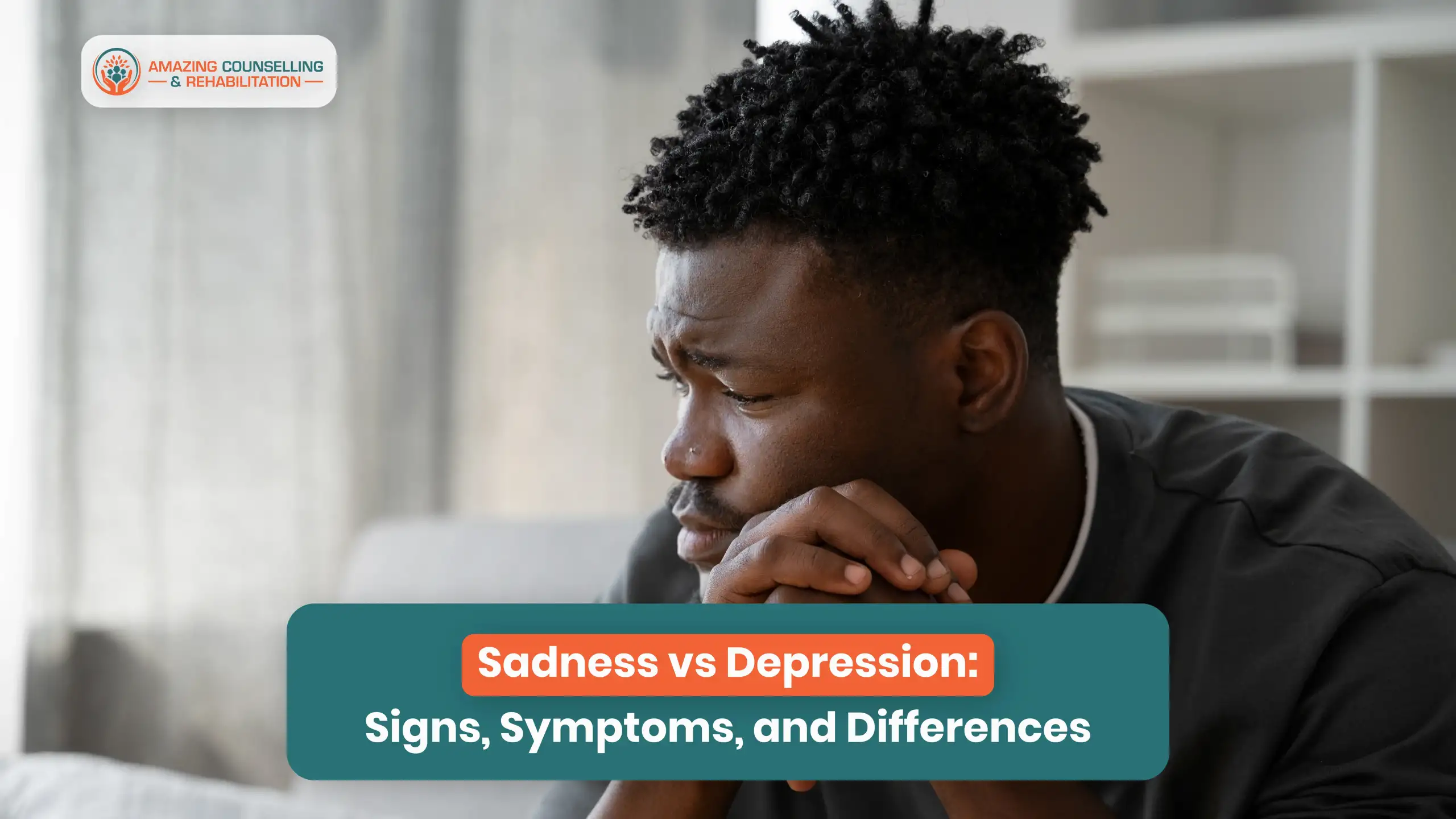
Sadness and depression have been commonly used due to their similarities; though, the two have major differences in nature, time period, and influence. It is very important to understand the difference between these two for emotional awareness and mental health. This blog explores how sadness is a normal response to life events, whereas depression is a clinical condition which disturbs daily functioning, thoughts, and well-being beyond temporary emotional lows.
What Is Sadness?
Sadness is not a mental disorder, but a normal, temporary, emotional reaction to life events and problems. Sadness is a healthy emotional process in contrast to depression that is enduring and clinically significant in terms of functioning in the difference between sadness and depression. Grief and bereavement therapy services are especially relevant for sadness produced by loss that may lead to sadness.
Common Causes
Sadness is usually provoked by loss, disappointment, stress, and failure in everyday life. In depression vs sadness, sadness is obviously caused by external factors, and depression can be caused internally, which explains how depression is different from sadness in origin.
How Sadness Feels
Sadness is emotionally tough but is circumstantial and temporary. Sadness is temporary and varies with the situation, whereas depression is more enduring, severe and less affected by external factors.
Short Term Duration
Sadness is temporary and it dissipates with improvement of a situation or time. Sadness is resolved, depression is more enduring and impacts on emotional stability and functioning.
What Is Depression?
Depression is a medically-diagnosed mental disorder characterized by incessant diminished mood and lack of interest. Depression is not a transitory feeling but a medical condition that influences the general mental stability and functioning.
Not just an Emotion
Depression is not merely depression or emotional response, but a disease. When depression is more than normal and interferes with normal living, it needs more insight into the difference between depression and sadness.
Can Occur Without Reason
Even when a trigger or an occurrence in life is not evident, depression can occur. Depression might be a biological or psychological problem that influences mental wellbeing.
Affects Multiple Areas
Depression is a condition that influences mood, way of thinking, behavior, and even physical well-being. Sadness is confined in emotion compared to depression, which affects overall functioning, and thus more complex and serious than fleeting emotional distress.
Requires Attention
Depression is a condition that might need professional intervention and even medical care or therapy. How do you know whether your depressed or simply sad, persistent symptoms and functional impairment are a result of depression, as opposed to sadness that passes on its own and does not result in depression. Psychotherapy services deliver comprehensive emotional support for both temporary sadness and long-standing depression situations.
Key Differences Between Sadness and Depression
Information of sadness vs depression assists in the recognition of emotional conditions, the difference between the temporary sadness and the clinical depression that is enduring with respect to mood, behavior and everyday functioning, which is central in the awareness of mental health and early involvement.
Duration
Duration is another difference in depression vs sadness; sadness is short-lived and can be resolved in a short time whereas depression can last weeks or months and fail to improve and may need medical help to treat it correctly.
Cause
Sadness tends to have a definite cause such as loss or disappointment, and depression can happen without any particular cause and, therefore, is more complicated and difficult to comprehend on an emotional level than the difference between sadness and depression.
Intensity
Sadness is easy to cope with emotional pain, whilst depression is deeper, overwhelming, and long-lasting emptiness that impacts on thoughts, feelings and general well-being in a major way over a long period of time and this explains how depression is different from sadness.
Impact on Daily Life
Clarifying what distinguishes sadness from depression, sadness does not impede daily activities, while depression hampers one’s performance in terms of work, academics, and personal interactions, resulting in difficulty leading an ordinary life and reducing productivity and motivation levels.
Emotional Range
How do you know whether you are depressed or simply sad? Sadness is a condition that permits interludes of joy whereas depression is a condition that results in loss of interest or enjoyment in whatever one does, called anhedonia, which affects emotional experience.
Signs and Symptoms of Sadness
The concept of sadness vs depression aids in identifying sadness as a short-lived mood that is characterized by low mood, emotional distress, and lack of motivation and is reversible over time without impairing functioning in everyday life to a great extent.
Feeling Down or Low
Sadness has an onset of a general sense of being down or feeling low, and is usually caused by life events and is not persistent or clinically significant giving the sense of difference between sadness and depression.
Crying or Emotional Discomfort
Sadness can be accompanied by tears or emotional distress due to stress or loss, but the effect does not last long, and the emotion is relieved over time as emotional equilibrium is restored in the context of depression vs sadness.
Temporary Loss of Motivation
How depression is different from sadness can be understood in the context that sadness may lead to temporary lack of motivation but one is still able to perform the minimum functioning and is interested again once the emotional distress has diminished or the situation has improved with time.
Still Able to Enjoy Moments
Thus, the differences between sadness and depression can be seen in the fact that, despite being sad, people can still enjoy positive emotions or diversions. Therefore, while their mood or situational factors may be down, emotional responsiveness remains intact.
Gradual Improvement Over Time
How do you know that what you have is depression and not just being sad? The feeling of sadness normally goes away eventually, with time, assistance, and the solving of whatever issue was there, but depression doesn’t simply go away by itself.
Signs and Symptoms of Depression
It is important to note that there is a difference between the two because while depression does involve sadness, it goes beyond that and involves several other more severe symptoms, including physical ones, that affect one’s ability to function effectively without proper care. Personalized mental health treatment plans provide treatment strategies customized to fit individual requirements regarding emotions and mental health.
Persistent Sadness or Emptiness
As far as distinguishing between sadness and depression goes, the definition of depression is the experience of extended spells of feeling sad or empty for weeks and months on end, without a specific cause.
Loss of Interest in Activities
In distinguishing depression from sadness, one of the symptoms that clearly differentiate depression from sadness is the loss of interest in activities that used to be enjoyable, indicating an absence of feeling and joy, contrary to being sad.
Fatigue and Low Energy
Whereas sadness may result in feelings of being worn out and lacking energy on some days, depression results in continuous fatigue and exhaustion, causing even elementary activities to become difficult.
Sleep Changes
The first distinguishing factor between sadness and depression is that depression has a tendency to interfere with sleep patterns, making one suffer from either insomnia or inconsistent sleep.
Appetite Changes
Concerning how you know if you are depressed or just sad, depression is known to have an effect on one’s appetite, causing gorging or lack of appetite, while in sadness, eating does not change much.
Difficulty Concentrating
Sadness may cause an individual to lose focus on their day-to-day activities, whereas depression affects the cognitive functions, making it difficult for an individual to focus, make judgments, and decisions.
Feelings of Worthlessness or Guilt
However, when distinguishing between depression and sadness, depression features intense feelings of worthlessness, unnecessary guilt, and self-blame, which are generally deeper and more enduring compared to the temporary feeling of regret that occurs during sadness.
Thoughts of Self-harm
While one might wonder whether depression is synonymous with sadness, major depressive disorder entails contemplating self-injury, thus showing itself to be a very serious psychiatric illness, unlike sadness, which does not entail such contemplation.
How to Know If You are Depressed or Just Sad
Use such considerations as duration, severity, pleasure, and function to distinguish between sadness and depression. When you feel sad, it will eventually go away, but depression continues for weeks or even months and impacts your ability to do tasks. The indication that you are feeling sad is that you are still able to derive pleasure from performing tasks and be productive.
Causes of Depression
Sadness and depression should not be confused when one is trying to comprehend them. Depression arises because of different causes such as biological factors, e.g., brain chemical imbalance or genetics, psychological triggers like stress or trauma, and environmental factors like loss or isolation. Unlike sadness that is triggered by something known, depression can arise as a result of all these factors working together.
When to Seek Help
Asking for assistance is essential once the symptoms have been present for more than two weeks, once life becomes hard to manage, or if the emotional problem starts worsening over time regarding sadness vs depression. This may be different from normal sadness and could mean that one is suffering from depression. It will be best to seek out professional assistance from the experts. Depression therapy services focus on professionally treating the clinical symptoms of depression.
Coping Strategies and Support
It is important to understand the distinction between sadness and depression because it plays a critical role in identifying appropriate coping strategies and support systems that can enhance psychological wellbeing and help heal through proper health behaviors and social connections. Cognitive behavioral therapy services are extensively used and an evidence-based treatment for handling depression successfully.
- Converse with trusted individuals who understand your emotions.
- Have a proper sleeping schedule, do exercise, and eat healthy food on a daily basis.
- Use mind techniques in order to manage stress.
- Use relaxation methods including deep breathing and meditation.
- Use professional guidance through therapy or counseling.
- Use prescribed medications suggested by a doctor for treating depression.
- Be consistent in using coping techniques.
How Amazing Counseling support with Sadness vs Depression
It is easier to distinguish between sadness and depression when appropriate help is available, and here comes Amazing Counseling which is an important factor that can help achieve it. The difference between these states can be identified, reasons explored, and coping mechanisms developed through professional assistance. By means of therapy, emotional counseling, and effective techniques, Amazing Counseling helps find harmony again and boost one’s psychological state.
FAQs
What is the difference between sadness and depression?
No, sadness is not an ongoing mental health problem; depression is a chronic one that influences the overall functioning.
How many days do you feel sad?
Depression is usually temporary and fades away as situations unfold or emotions die.
What are the typical symptoms of depression?
Symptoms generally include persistent sadness, low energy, lack of interest, sleep changes, as well as difficulty in concentration.
Is it possible to be depressed without a definite cause?
Yes, depression may come without apparent causes because of biological, psychological or environmental causes.
At what point do we need to seek help in relation to depression?
Consult assistance when symptoms persist (weeks) or progress, or disrupt daily functioning and life.