
Anxiety is a widespread mental disorder, which may have a tremendous impact on the quality of lifestyle, as everyday activities may seem overwhelming, and worry or fear may be experienced as persistent. When unattended, it may affect work, relationships and well-being in general. Counseling and a therapeutic process is a significant measure to being able to comprehend and cope with these emotions, a means of giving the tools to control them and make life better. This paper will discuss the reasons and signs of anxiety, describe some different treatments, and provide some realistic tips on how to seek effective treatment.
What is Anxiety?
Anxiety is a normal reaction to stress, which is manifested by tension, nervousness, or fear. Although the feeling of worry is a normal aspect of life, when it is persistent, overwhelming, or disruptive to everyday functioning, it turns into a disorder of anxiety. It can be excessive fear, restlessness, or lack of concentration and impact both psychological and physical well-being.
Anxiety disorders can be divided into several common ones, but each one has its peculiarities. In generalized anxiety disorder (GAD), the worry is always excessive, and about most of the situations that happen in our lives. Social anxiety disorder is a condition that brings about a lot of fear towards social interaction or being evaluated by other people.
Panic disorder is characterized by the sudden recurring panic attacks accompanied with other symptoms such as elevated heart rate, dyspnea (suffocation) and dizziness. Although anxiety disorders are chronic and may greatly interfere with daily life, as opposed to normal stress or worry that usually involves a clear trigger and fades away with time, anxiety disorders lack a clear trigger, and thus are chronic.
Causes of Anxiety
A combination of biological, environmental, psychological, and lifestyle causes anxiety, which influences mental health and normal functioning.
Biological Factors
Anxiety is dependent on genetics and brain chemistry. The abnormality or imbalance of brain chemicals or neurotransmitters, including serotonin and dopamine, may increase susceptibility. Mental health counseling for anxiety should be done to ensure early detection and proper management of anxiety because family history may be a predisposing factor.
Environmental Factors
Anxiety disorders can be aroused by stressful life incidences, trauma, or by the continued pressure. Coping skills are prone to childhood experiences and the present environment. Counseling for anxiety is a way of assisting individuals in working out such stressors with a resultant decrease in symptoms and development of resilience through organized therapy types for anxiety.
Psychological Factors
Anxiety is contributed by personality traits e.g. perfectionism or high sensitivity. Symptoms may be aggravated by poor coping mechanisms. Counseling for anxiety offers techniques of regulating thoughts, emotions, and actions to help the individual stay mentally well and have self-confidence.
Lifestyle Factors
Anxiety can be worsened by sleeplessness, unhealthy diet, and drug abuse. Exercising and self-care are very effective in minimizing symptoms. Counseling for teen anxiety and adult therapy types for anxiety counseling prescribe lifestyle changes, which favor changes in the long term to stabilize the mental state and balance the emotions.
Symptoms of Anxiety
Anxiety has emotional, physical, and behavioral symptoms, which pose a problem and impact daily lives, which emphasizes the role of counseling in anxiety.
Emotional Symptoms
Emotional signs of anxiety are typically fear, irritability and constant restlessness. Types of therapy anxiety can be used to deal with anxiety and identify triggers and deal with overwhelming emotions. Counseling for anxiety gives coping skills to help in alleviating emotional distress.
Physical Symptoms
Anxiety is usually accompanied by rapid heartbeat, sweating, headaches and fatigue. These are physical manifestations that are debilitating when unattended to. The anxiety disorder counselling and individual counseling on anxiety focus on methods of eliminating the symptoms and reinstating physical wellbeing.
Behavioral Symptoms
The normal behavioral symptoms include avoidance of social situations, procrastination, and difficulty concentrating. Counseling for teen anxiety and adult counseling assists in dealing with these patterns by using anxiety type forms of counseling, which leads to healthier habits and better functioning.
Impact on Daily Life
Symptoms of anxiety may interfere with employment, education, interpersonal, and personal schedules. Counseling for anxiety and therapy types of anxiety helps to enhance coping skills and thus, people are at a position to regain control, minimize avoidance behaviors and have a balanced lifestyle.
Types of Therapy for Anxiety
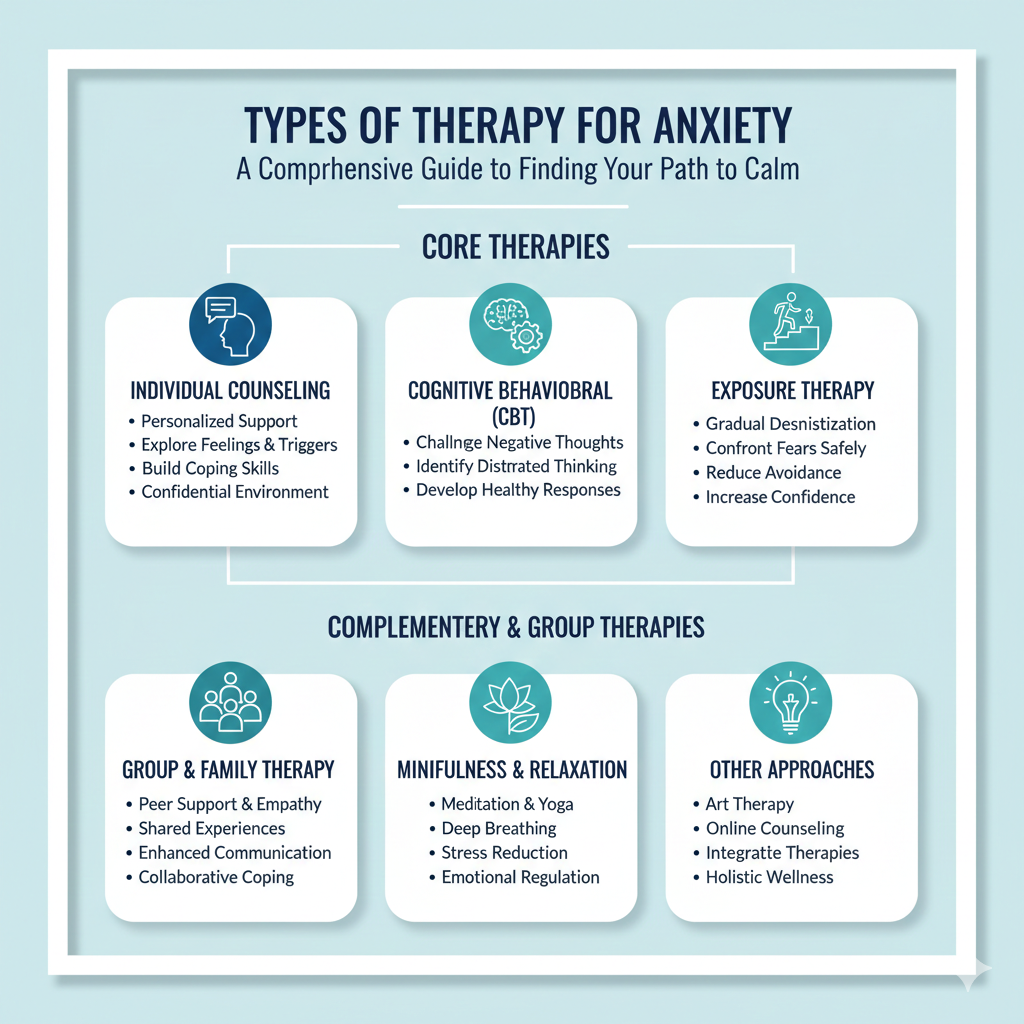
Anxiety can be treated through various therapy types for anxiety, such as counseling, CBT, exposure therapy, mindfulness and supportive therapy.
Individual Counseling
Anxiety for counseling is individual counseling that is personalized to each individual and experience. Mental health counseling for anxiety assists the client to examine feelings, create coping mechanisms and tackle difficulties under a secure and confidential environment to achieve lasting emotional resilience.
Cognitive Behavioral Therapy (CBT)
CBT involves modification of thoughts that are negative and which contribute to anxiety. CBT techniques are frequently used in counseling of anxiety disorder, as they assist a person in identifying distorted thinking, worrying and finding healthier ways of responding, which makes it one of the most effective forms of therapy in anxiety.
For effective strategies to cope with anxious thoughts and behaviors, our expert programs, such as cognitive behavioral therapy services which provide personalized techniques to achieve enduring relief.
Exposure Therapy
The exposure therapy gradually desensitizes the individuals to fear situations or triggers. Individual counseling for anxiety involves controlled exposure, which is an evidence-based method of reducing avoidance behaviors, developing confidence, and minimizing fear responses, which provides a structured approach to anxiety symptoms management.
Group Therapy
Group therapy offers peer support and common experience, and less isolation. Teen anxiety and adult counseling both have advantages associated with group interactions that help in building empathy, encouraging and developing social skills and learning coping mechanisms through collaborative therapy types for anxiety as far as anxiety problems are concerned.
Family Therapy
Family therapy assists adolescents or children with anxiety, where parents or caregivers are used in the treatment process. The effects of counseling anxiety disorder within a family include enhanced communication, support, and joint management of triggers, which lead to lasting emotional stability.
Mindfulness and Relaxation Therapies
Breathing, yoga, meditation, and mindfulness can be used to relieve the mind, alleviate stress. These techniques are used in counseling for anxiety to enhance self-awareness, emotional control, and mental well-being, thus being complementary treatments besides other therapy types for anxiety used to treat anxiety.
Other Approaches
Another alternative or a flexible way of dealing with anxiety is through integrative therapies, art therapy and online counseling. Anxiety disorder counseling may be based on creative expression, digital access, and holistic approaches to focus on the needs of various individuals within the framework of improving coping styles in general. Check out our guide on various treatments for anxiety and how they can help at every stage by exploring different approaches and find the most suitable options for your requirements.
Choosing the Right Therapy
There are a number of factors that need to be considered before deciding the correct therapy to be used in anxiety, which are age, the severity of the symptoms, personal preferences and lifestyle. Teen anxiety for counseling might vary to adult counseling whereas individual counseling to treat anxiety can be modified to the individuals with more severe or chronic symptoms. When these factors are understood, the types of therapies to be used in the treatment of anxiety can be chosen to be those that are most effective and which will provide long-term mental health.
Mental health professionals with a license guarantee safe and evidence-based care. Mental health counseling for anxiety, which is supplemented by lifestyle modifications such as physical exercise, sleep, and management of stress, improves the results. Anxiety disorder and complementary treatments, including mindfulness or relaxation therapy, are the most effective ways to incorporate a counseling approach to the disorder to bolster overall health and sustained recovery. If you are struggling with persistent stress or worry, our professional anxiety therapy services can provide support to help you feel more balanced.
Tips for Managing Anxiety Alongside Counseling
Mental health can be enhanced with the use of daily self-care, stress management, and a supportive environment in addition to anxiety counseling. These coping mechanisms are used to supplement therapy types for anxiety to allow people to have emotional stability, minimize triggers and enhance resilience.
Following are the tips to manage anxiety:
- Engage in mindfulness or meditation on a daily basis to relax the mind and thoughts of anxiety.
- Have a regular sleep routine to facilitate mental and bodily health.
- Do consistent exercise e.g. walking, yoga, or exercise plans.
- Use a journal to monitor emotions, stimuli and improvement in anxiety for counseling.
- Restrict caffeine, alcohol and other substances that may worsen the symptoms of anxiety.
- Perform deep breathing or progressive muscle relaxation to deal with stress.
- Have a schedule that is inclusive of both work, rest and recreational activities.
- Isolation can be reduced by having friendly friends, relatives or peer groups to help you.
- Unless one is overwhelmed, set realistic goals and subdivide tasks into smaller steps.
- Engage in good self-talk and affirmations to respond to negative cognitions.
These and other types of therapy to anxiety help to improve coping abilities and help individuals better cope with anxiety.
When to Seek Help Immediately
In case anxiety is too big or it starts to interfere greatly with everyday life, it is best to seek help as soon as possible. Some of the red flags are frequent panic attacks, failure to carry out daily activities, excessive agitation, or constant thoughts about committing self-harm. The intervention by licensed professionals is essential in this situation. Mental health counseling for anxiety can offer immediate assistance and, in an emergency, 24/7 availability of resources such as crisis hotlines, emergency care services, and online counseling can be used to guarantee that the client is safe and guided until regular therapy or individual anxiety counseling can be set up.
How Amazing Counselling Help with Counselling of Anxiety
Anxiety counseling provides a personalized way of transformation to knowledge, control and conquer anxiety. With the help of individual approach, evidence-based forms of therapy of anxiety disorders, and the use of practical coping mechanisms, one will be able to gain control over the thoughts, feelings, and life. Early assistance improves the efficiency of mental health counseling for anxiety with respect to anxiety, causes less distress, and equips a sustainable well-being. Utilizing a professional who is licensed, you are already moving in the right direction to be relieved, resilient and have a more balanced and fulfilling life, and this alone proves just how effective and life-changing counseling really can be.
FAQs
What kind of counseling is best for anxiety?
Individual counseling for anxiety and Cognitive Behavioral Therapy (CBT) are the most effective types of counseling for anxiety.
What is the 3-3-3 rule for anxiety?
It’s a grounding exercise: identify 3 things you see, 3 things you hear, and move 3 body parts to calm down from a panic attack.
What is the best way to treat anxiety?
A combination of different types of therapies for anxiety, such as CBT, mindfulness, and, if necessary, medication.
What is the #1 worst habit for anxiety?
Overthinking and rumination can worsen anxiety and make it more difficult to treat.
What do therapists prescribe for anxiety?
Therapists prescribe CBT, relaxation therapy, lifestyle changes, and, if necessary, anti-anxiety medications prescribed by a psychiatrist.